Tom Selwyn - Walking Around the World with a Pack of Cards
Approaching Australia
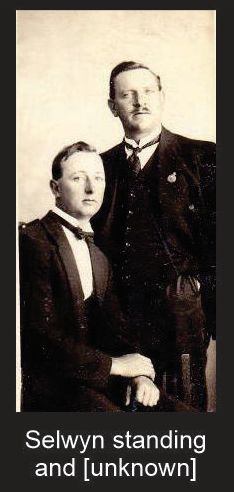 In The Linking Ring magazine of December 1943 (11) Aristide Scola, a correspondent with Selwyn, wrote:
“After a trip to South America, Tom went to South Africa, then to Great Britain where he showed around the provinces in England, Scotland, and Ireland. Then back to Africa, where he fought as a British Mounted Trooper in the Boer War, often giving shows for the soldiers at what were then called Camp Fire Concerts. When the Boer War ended, Tom went to India, where, he says, "I met Charles Bertram in Bombay, and played before every one of the numerous Rajahs and native princes, as well as in every hole and corner of India, Ceylon, Burma, the Malay States, and Slam; then through the Shan States, and finally into China proper, travelling mostly on foot. For a time I travelled in far western China, across Central China into Manchuria and Korea, over to Japan, back to China, and down to French Indo-China. "I spent six months in Hanoi, Capital of Tonkin, showing in hotels a la Malini, and sometimes in native theatres. Then I crossed over to the Philippine Islands, where I played all Camps and the Orpheum in Manila, and after doing all North and South Islands crossed to Borneo, Sumatra, Java, and down to Australia …”
There is a great deal to unpack in Selwyn’s version of events, and we are left with the difficulty of knowing only some of the facts. Although it is clear that he spent much time in India, there are no records of his location or performances, other than what he relates himself, and the military references mentioned above. Selwyn’s articles, “Pleasant Magical Memories”, from the Magic Circular of 1941 (reproduced at the end of this essay), have the ring of truth and provide some clues to his performing activities, but there is no way of confirming the anecdotes, unless more information comes to light. Likewise, his naming of the various countries he ostensibly visited before coming to Australia.
Of his claims to have been to South America, South Africa, back to England and again to Africa as a combatant in the Boer War, it can be said that no evidence has been found, and the timing of events does not lend credibility to the claims. In his early time with the K.S.L.I. Regiment, a group of soldiers did ship to the Ashanti Expedition of 1895/96, but Jim Rouse finds no evidence that Selwyn was part of that battalion, or that he was ever wounded before his WW1 service. In the ‘Second Boer War’ 1899-1902, he was either recorded as being in India, or getting himself into trouble with the army.
Rouse notes a photograph of Selwyn wearing some Boer War medals, but wearing them incorrectly. There must be some suspicion, at least, that he had come into possession of his brother Archie’s medals after Archie’s death in 1901, and used them to bolster his own back-story. Selwyn would write (12), “Many of our local amateurs have joined up with the various entertainment units, and tour the many camps. The soldier boys like magic just as much as they did in 1914-18, when I had the pleasure of giving them Magic in Egypt and France. I also have the honour to be one of the few that are left that gave the boys some pleasure in the South African War in 1900-1-2.”
Another small mystery is that in June-July 1901, theatrical newspapers of London featured a few advertisements looking for talent to manage; and then a company named George Arthur & Co, appearing under the management of a Tom Selwyn, based at Percy Hall off Tottenham Court Road. It cannot be said that this was certainly our Selwyn, and the dates do not quite tie in with his absence without leave, but it raises the question as to whether Tom did indeed spend his time AWL from the army in “Great Britain where he showed around the provinces in England, Scotland, and Ireland.”
It was between 1902 and 1904 that Selwyn, under his enlisted name Thomas Oliver, started coming to the attention of the magical press. Mahatma, The Sphinx, and Stanyon’s Magic have the brief mentions of his stage name Chas. Selwyn, from which information his military record was tracked.
Having transferred to the Army Reserve in June 1905, he is off the radar for some time, and probably did engage in a roaming life, though probably not as widely as he would make out.
The Australian press caught on to Selwyn’s story in late 1906, in a couple of short pieces relating his supposed “wager” to walk around the world, but his name had changed yet again. The origins of this new name are not known, unless it was to further conceal his whereabouts from the Army, but Thomas Lorimer (13) was said to be representing the ‘Allan Telegraph’ and the Salford Chronicle, one article saying he had a contract to complete a circuit of the world in four years, and had set out from Karachi, India, on September 16, 1906, arriving at Cawnpore on October 18. His statement that he had already been through India, Burmah, Kachin country, Thibet, Great Plateau Mongolia, all areas of China, Hong Kong and the Philippines must be queried purely on the basis of available time, his Chinese travels not fitting well into the route.
The stated future destinations on the walk would then be Australia, New Zealand, America, Britain, France, Germany, the Balkans, Turkey, Palestine, Egypt, Abyssinia, Somaliland and back to Karachi. Either way, ‘Lorimer’ arrived in Newcastle, Australia on October 5, 1907 aboard the steamer ‘Zamora’ which had sailed from Manila. The Herald said he had worked his passage as a deck hand.
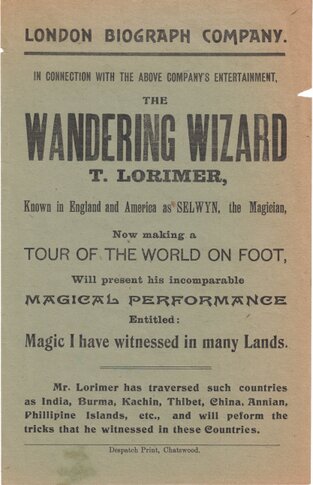
Tracking Selwyn in Australia
Some words are needed at this stage, about what can be discovered of Selwyn’s performing and travels after his arrival in Australia. A few tours can be tracked through the mainstream press, but there are many clues to other performances which either cannot be dated or, when checked, simply run into a dead end. That is not to say that Selwyn was not out and about, or that his advertising material went unused; he was certainly active.
However, he was an ‘act’ rather than a ‘show’, and given his love of moving around it is very likely that many of his appearances were only promoted locally, perhaps with posted handbills or word-of-mouth. He may have worked as an act with small travelling troupes or in “Pops” - popular concert parties. We also have the difficulty of knowing whether Tom always promoted himself under the name ‘Selwyn’. According to his own story (11) “I worked theatres, clubs, hotels – in fact, anywhere that I could.”
We have information concerning his travels with Hanco, and his New Zealand trip in 1923. But there are references in the magazines of the Australian Society of Magicians which indicate extensive country tours for which we have no supporting information. In 1910 Selwyn was said to be performing at the Royal Standard Theatre in Sydney, but newspaper records do not confirm this. Some professional promotional material for ‘Hobart Conroy’ stands alone with no guide to its date or location. Most notably, after his marriage, not a single commentary can be discovered about any performance involving his wife “Mdle. Selwyn”, despite there being several posters and promotional leaflets prominently billing her as a mind-reader.
We are left in the same position as with his whereabouts in other countries – there is no question that Selwyn travelled widely, but it will be for some future magical historian to uncover more information to help fill in the missing gaps.
Performing 1908 – 1909
What can be gleaned is that Selwyn was using the name Thomas Lorimer or T. Lorimer during his early days in Australia, though sometimes appending “known as Selwyn”. The last appearance of the Lorimer name was in November 1909 at the Geelong “Continental Pops” at Her Majesty’s Theatre. He is seen briefly during April 1908 in a concert at Newcastle, and sometime in these early days he formed a connection with an animated movie concern under the names ‘The Palace Animatograph’ and the ‘Wonderscope’, although sadly no record of a venue for these appearances can be found, nor for his advertised lecture on his travels. Pagden and Mayne were a known comedy duo. Florence Lester was known as ‘The Whistling Queen’ and would appear as ‘Roberts and Lester’ in 1914.
While the proprietor was a Mr G. Smith, it is notable that the equipment operator was Percy Claude ‘P.C.’ Smith, founding vice-president (14) of the Australian Society of Magicians – an appropriate time for Selwyn to make himself known amongst the Sydney magical fraternity, and T. Lorimer was noted attending the November 1908 meeting of the A.S.M. (15). The ‘Magic Mirror’ would note in 1909 that Smith was doing good business around the Sydney suburbs with his pictures. He was also the owner of a cache of magic collectables which were auctioned by Cromwell’s in Sydney (May and July 2005) at which a poster of Houdini was sold for a then-record price.
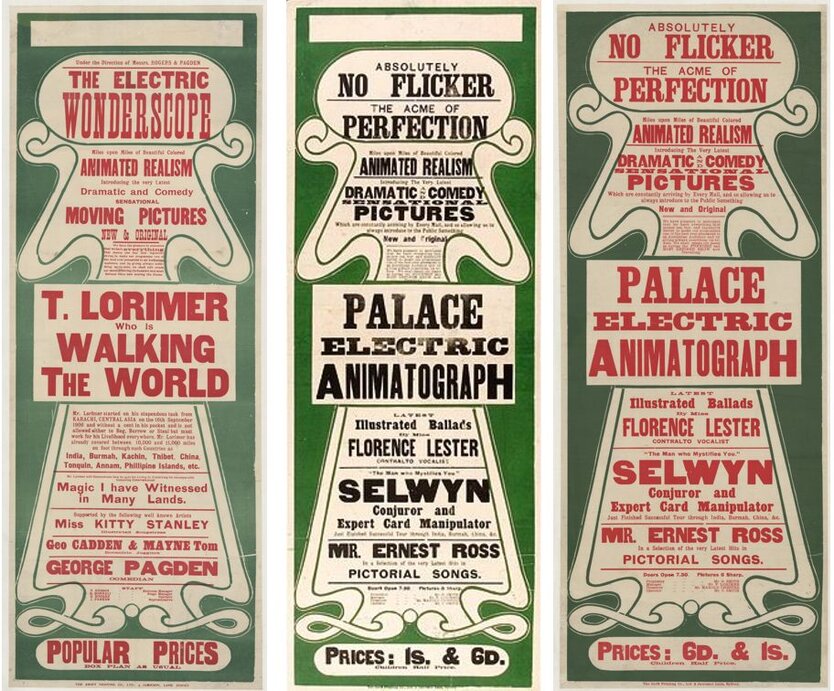
Selwyn is next noted, by The Magic Mirror of February 1909, ‘touring north-west’ New South Wales. No other information can be located, but in September the Mirror reported that Selwyn had met up with magician Arthur Valli in Grenfell, and the pair had joined forces under the title ‘The Mysterious Kardos’ to work a novelty show of magic and lightning sketches. Australian-born Arthur Valli, an A.S.M. member, magician and sketch artist who had been out on tour since May 1909, was a good friend of Oscar ‘Dante’ Eliason during his 1898-1899 tour of Australia, and would later write an informative series of articles in his memory (16). Valli left Australia in 1911 and by 1928 was Secretary of the Los Angeles Society of Magicians. He died in 1963; his son, Larry Valli, laid claim to being the first ‘Bozo the Clown’.
The partnership lasted at least several months, reportedly moving through the Temora district, headed for Victoria, and playing ‘show’ dates which might be taken to mean agricultural shows. By November they were said to be in Melbourne with Lytton's Moving Theatre for two weeks, beginning November 1st; however the troupe cannot be identified, and later on Arthur Valli was once again performing solo.
1910 – With Hanco and La Belle Cara
At last in 1910 we find Selwyn on a tour which can be tracked. From late June, he was in Queensland with a troupe of performers headed up by an escape artist billed as Hanco. This was Samuel Phillip Cooke, at this point 29 years old, whose history is the subject of considerable research by Newcastle journalist and history writer, Greg Ray (17) . It may seem that Hanco was capitalising on the arrival in March 1910 of legendary escapologist Harry Houdini, but he had in fact been an active escape artist starting in 1905 as one of the ‘Hanco Bros.’ and with a career which would last well into the 1930s. He featured bridge jumps and challenge escapes as well as his own Steel Trunk escape in which the locked trunk was dropped in a huge tank of water.
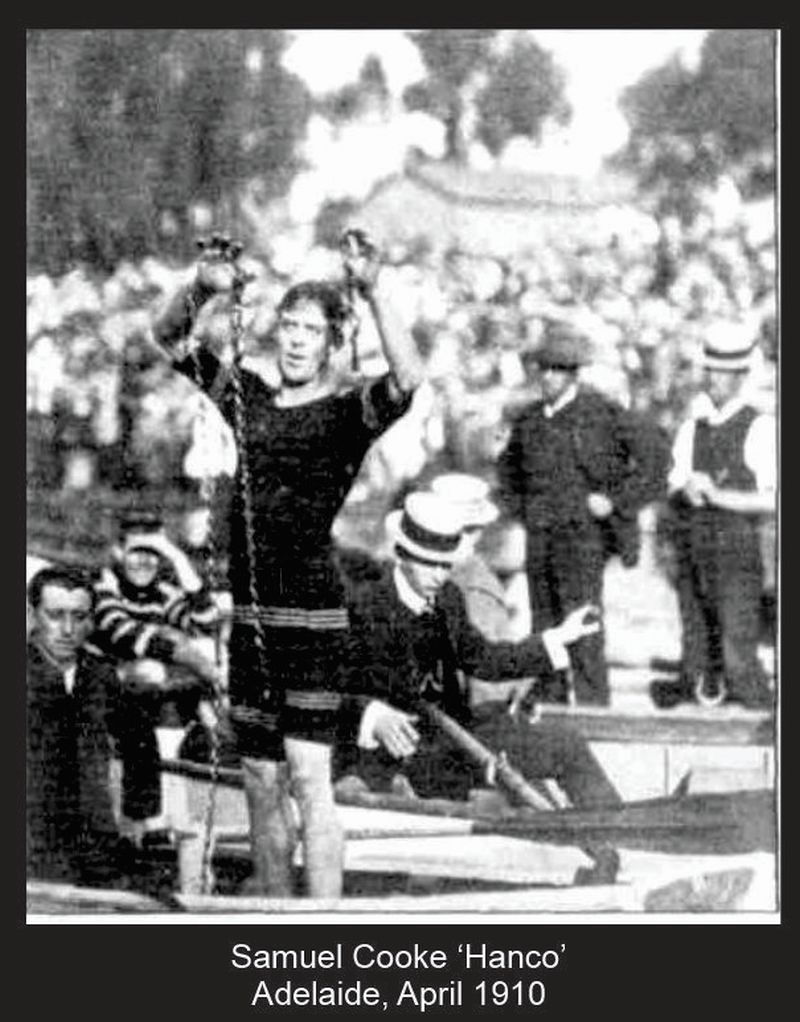
Early mentions of the Hanco troupe in Queensland suggest that Tom Selwyn may have been acting as a touring manager as well as the magic act in the show. However the troupe was soon advertised as being under the direction of Messrs Birch and Carroll (later of movie exhibition fame as Birch Carroll & Coyle), and General Manager P.E. Warren. A news article in September states that Selwyn was running ‘an agency business.’ This tour, at least, gives credibility to the idea of Selwyn travelling with circus or show companies while he was in the United States.
Hanco had been playing in Adelaide and Hobart, and may have been working under Selwyn’s guidance earlier, but the pair are seen travelling together towards Brisbane on May 27 where they remained for some time with Ted Holland’s New Vaudeville Entertainers, Hanco accepting multiple challenges, and making a shackled escape from his steel trunk which had been lowered into the Brisbane River. It was not until June 29 that Hanco moved across to Charters Towers, where singer Ida Berridge and comedian Harry Linden were already playing at the School of Arts, with Cora and Edward Trevor, trapeze performers.
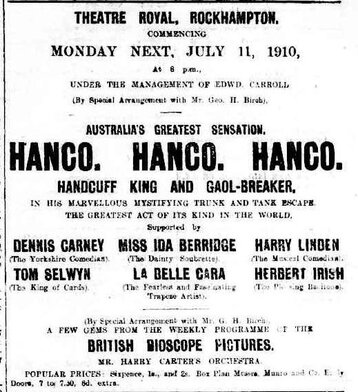
A troupe of performers was then created, which included Selwyn, comedians Dennis Carney and Harry Linden, singers Ida Berridge and Herbert Irish, and ‘Mdlle. La Belle Cara, the Fearless and Fascinating Trapeze Artist’ of whom more will be told. Hanco was clearly the headline act; the live artists were supplemented with documentary motion pictures.
The performers appeared at Charters Towers, Ipswich, Rockhampton, Mt. Morgan, Gympie and Toowoomba and were advertised, by early August, to be at Maitland in New South Wales, where a Mr. Edmond Trevard was billed to perform with his educated canines. This was Edward Trevor, the father of ‘La Belle Cara’, who had earlier been billed as ‘Ted Trevor.’
Although Hanco’s escapes dominated every review, Tom came in for some good notices:-
Evening Telegraph (Charters Towers) July 1 – “Tom Selwyn the card manipulator was a strong abettor. Tom has the rare knack of being able to execute the most daring tricks, with a smile and a laugh, that we have ever seen. From the first he has the crowd with him all the way, and his method of ‘paralysing’ his juvenile assistant puts him on good terms with everybody at once.”
July 4 – “Mr. Tom Selwyn, who on Saturday received an ovation for his particularly clever card and coin manipulations will also be seen …”
July 4 – “Mr. Tom Selwyn, who on Saturday received an ovation for his particularly clever card and coin manipulations will also be seen …”
Morning Bulletin (Rockhampton) July 12 – “Mr. Tom Selwyn, described on the programme as the king of cards, went far to establish his title by the clever sleight-of-hand business he performed with an almost complete absence of apparatus. His patter was more than ordinarily amusing.”
The Cora Trevor Scandal
Plans went awry when, at Toowoomba on July 29, the trapeze artist ‘La Belle Cara’ fell to the stage after one of the trapeze ropes gave way. She fractured her left wrist, and her father, who was assisting her, was also severely bruised. Unable to continue, the pair advertised their farewell, as did Ida Berridge and Harry Linden, and the troupe fell apart. Cora and Edward retreated to Brisbane for a month, before joining up with Barton’s circus.
There was worse to come, but not for some months. Selwyn and Hanco now moved south through Tamworth and Maitland during August, where Selwyn is mentioned in advertising as Hanco’s manager. By September, Hanco was back in Sydney, possibly still managed by Selwyn.
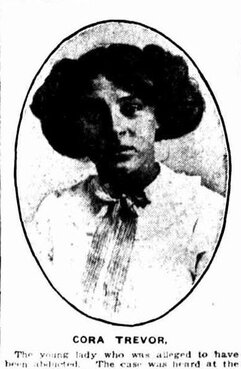
Who was Cora Trevor, also billed as La Belle Cara?
She was a child of the circus, just eighteen years of age, born at Waterloo, Sydney in 1892 (18). As early as 1899 (19) she is mentioned with Hyland’s Circus in Geelong, in a balancing act with her father. With the Hanco troupe, her act was as “The Girl with the Iron Jaw” in which she would hang upside down from a trapeze, lifting (apparently her father, Edward) from a grip held in her teeth.
Edward “Ted” Trevor was likewise well-known in the circus, featuring his performing dogs, and also as a strongman (19) – “Professor Ted Trevor (the gentleman who challenged the mighty Sandow in feats of strength) gave an excellent exposition of what muscle can accomplish. His bearing up of six able-bodied people was an act loudly applauded.” (1903). He can be found performing as late as 1925. The duo had recently (1905) toured New Zealand vaudeville under the Fuller circuit.
At the end of November, Tom Selwyn was arrested in Sydney and brought before the police court, on a charge of taking Cora Trevor out of the possession, and against the will of, Edward Trevor, with intent to marry her. Selwyn, described as a theatrical agent, declared that he would not say where the girl was, that he wished to marry her, that she would “sooner throw herself in the harbour than go back again”, and that he would bring her to court when he got a solicitor.
Cora’s father was in Sydney also: (21) “The father, a big stalwart man, at this stage burst into sobs … I am afraid, said he, if a remand is granted with bail accused will clear out with my girl and I will never see her any more.” The magistrate granted a week’s remand but would not allow bail until Selwyn told police where the girl was.
A couple of days later, after emotions had settled a little, the missing Cora returned to her father, and he advised a hearing at the Central Police Court that he did not wish to go further in the matter, and that if Selwyn would promise not to molest the girl in any way while she was still underage, he would be willing to withdraw proceedings. The court, however, declined this offer and felt the case should proceed. With that, the full story emerged, as Selwyn conducted his own defence; starting by claiming that he was born in Lowell, Massachusetts.
Back in July at Charters Towers, Selwyn and Cora had formed each other’s acquaintance, and the father noticed that Selwyn was paying her very much attention. With his usual thoughtless boasting, Selwyn had claimed to be married to “one of the finest serios [dramatic actress] in Australia, then under engagement to Harry Rickards, at a fabulous salary, of course.” This was of course false, but claiming to be married was hardly likely to endear Tom to Cora’s father! Selwyn stated that he could see that Edward Trevor was ill-treating Cora, and that his heart “grew sympathetic towards the girl, and his sympathy ripened quickly into something stronger, so much so that in Charters Towers he proposed marriage to her.”
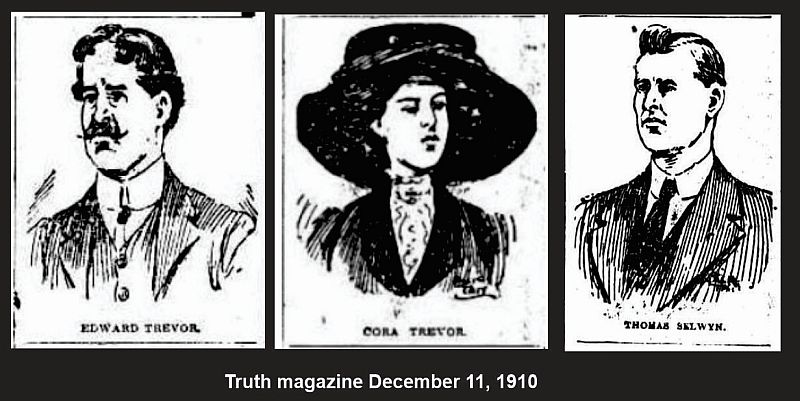
Selwyn and Edward Trevor had some arguments and a fight, but by July 21 at Mount Morgan, Tom wrote to Trevor asking for consent to marry his daughter, and assuring him that there was not the least truth in his boast of being married. Trevor did not respond, and a short time later, Cora had her fall at Toowoomba, and the family pair left for Brisbane. After a month they joined Barton’s circus and headed south, stopping at Singleton in New South Wales.
Edward had intercepted a number of letters from Tom to Cora, suggesting that they could ‘fly away’ once he had raised a few more pounds. In his courtroom defence, Tom alleged that Edward Trevor had mis-treated his daughter and that she was eager to get away from him.
Interestingly, Cora was mentioned on the bill of the National Amphitheatre in Sydney for October 29, though it is unknown whether the pair made contact.
While at Singleton on November 21, Cora borrowed enough money to secretly take a train to Sydney, where she tried to locate Tom Selwyn at his home in Nithsdale Street, and then found him performing at the Standard Theatre (performance cannot be confirmed). He was very surprised by her arrival, but helped her to stay with friends at Newtown, and she was still there twelve days later when her father arrived in Sydney looking for her. Selwyn refused to reveal her location. In court he stated that he did not wish to marry Cora for her value as an acrobat who could earn money for him, and that she was more anxious to leave her father than Selwyn was to induce her to flee.
Finally, Cora took the stand and steered a middle course between accusing her father (though she had run away twice before) and expressing a determination to marry Selwyn upon reaching the age of self-determination at twenty-one. She was tired, she said, of circus life and had left Singleton of her own accord, returning eventually to her father when she learned of Selwyn’s arrest.
The magistrate stated that although it was a difficult case, he considered that Selwyn had taken up a position that he had no right to take, and sent him for trial. Ultimately, the Attorney-General declined to proceed again Selwyn on the basis that a jury would not convict; and the drama concluded.
In January, 1911, Cora gave an interview stating that she had not been abducted, and that she had “never had a boy before”. “That was a big lift to hold a heavy man with your teeth?” she was asked. “I used to hold a donkey with Baker’s [circus]” she replied. “[Tom] said we could keep company, and if in three years, when I am 21, we are of the same mind, we can be married.”
The angle to this whole affair, never mentioned in the papers but casting an entirely different light on the story, is that Cora Trevor was pregnant. She gave birth to a son on March 2, 1911 which implies that (had she gone full-term) she may have been pregnant since May of the previous year, well before meeting Tom Selwyn.
A determined performer, she had continued working as a trapeze artist until at least November 1910, and by August 1911 was performing again regularly, though apparently not with her father, under the billing “La Belle Cora in her astounding and sensational dental act.” In 1912 she is noted in South Africa, and Variety magazine of July 1912 reported:- "Three-Act Splits … London, July 24. Vardon, Perry and Wilber, the popular American musical trio, have dissolved in South Africa. Wilber married La Belle Cora in Africa and returned to London.” It seems, however, that the name ‘Wilber’ was used by whichever person was currently appearing with the musical trio. It is speculated that she may have died in India in 1935. Edward Trevor continued in circus and vaudeville with his trained canines.
Post-1910 – Victoria and Tasmania
Though it is not easy to track Selwyn immediately after his court problems, he was still in Sydney at May 1911, and by March 1912 had moved down into Victoria, appearing in Ballarat with the ‘City Entertainers’ troupe at Her Majesty’s Theatre. He was noted in April as having become Secretary of the Australian Vaudeville Association (A.V.A.) in Melbourne, but by May he had resigned this position and ‘The Newsletter’ (22) mentioned it being due to ‘his eyesight’.
Based on Les Levante’s recollections, it would have been late 1911 or early 1912 that he met up with Selwyn in Melbourne, and began an association in which Tom sent him out on his first professional jobs.
In May 1912, Tom joined up with ‘The Lyric Entertainers’ for a proposed tour of the northerly towns of Tasmania. The 13-strong troupe included comedian Joe Lashwood (father of Hal Lashwood) and from first appearances the tour was headed for success. The Daily Telegraph (Launceston) said of Selwyn, “he is far and away above the ordinary run of these artists, and his various tricks cannot fail to hold the audience.”
Although the Launceston Daily Telegraph reported a good house for May 20 (“Tom Selwyn again provided an exceptionally clever card turn”), the proposed run across to Deloraine and further west ran into immediate trouble. The ‘Magic Mirror’ reported, “Biz said to be bad. Company advertised to play Launceston 3 nights. Played 2 and closed down on 3rd. Poor billing and advance work likely responsible for the failure.” In fact, they had managed to reach Burnie where a small advertisement promoted “Great Success of the Lyric Entertainers” but it was their last hurrah and the Magic Mirror commented, “[July 15, 1912] “Selwyn struck hard luck in Tattersmania. He had made up his mind to settle down to a biz venture, but the spec turned out badly, so he is back on the road again. “
Far more successful was the creation of a variety troupe, The State Entertainers, which was formed on December 24 under the registered banner of the ‘Tasmanian Amusement Company’ with Selwyn as Manager, and opened at Launceston’s Mechanics Hall on December 30, 1912 before transferring to the Lyceum Theatre, where they remained until early June 1913, receiving high praise and full houses. Tom Selwyn was billed as the manager of this troupe until at least the end of February. While he was not one of the performing artists, he did perform a burlesque act one night in February, when the comedy conjuring duo, Bisco and Bosco, missed their boat from the mainland. It seems that there was another unrelated ‘State Entertainers’ troupe travelling the upper north of Tasmania at this time; but Selwyn’s performers held strong in Launceston even against a season by The Great [Harry] Jansen in the days before he became Dante.
 While the documentation is slender, it appears that Selwyn remained around Launceston into 1914, and then at Hobart, although there are few clues other than his appearance at the King’s Theatre on May 20 for a charity performance. He is mentioned as the Advance Representative for the ‘Bohemian Dramatic Company’ at Zeehan, and in 1915 the Examiner stated, “… was at one time manager of the Empire Theatre, and is well known in Launceston.” The theatre in St. John Street had been known as the Empire c.1902-1910, when it was renamed as the Lyceum cinema.
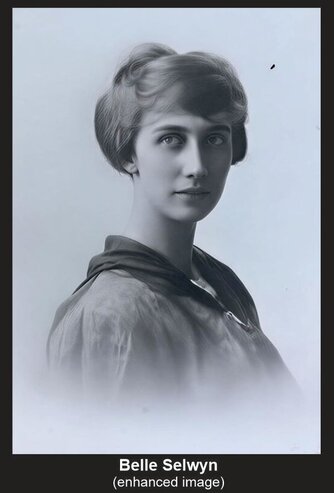
This is likely to be the time when he made the acquaintance of Miss Effie Isabel Wright Goldsmith, (“Belle”), eldest daughter of Thomas Barwick Goldsmith (bootmaker) and Rhoda Higgins/Goldsmith. She was working as a draper’s assistant, and in 1914 was 24 years old.
Return to Military Life
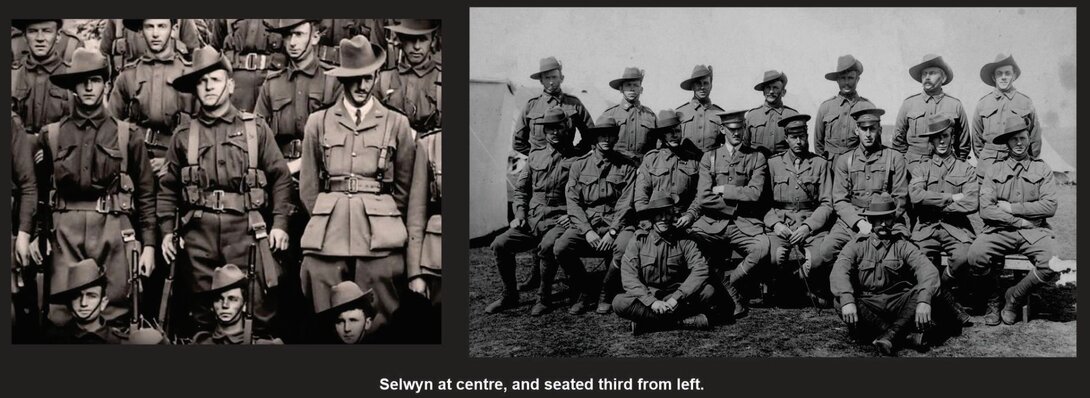
On August 4, 1914, Australia entered the Great War as a result of Britain’s declaration. While there was no Australian conscription for conflicts outside their nation, many volunteered, and on August 24, Tom Selwyn filled out his attestation papers, initially for the 12th Battalion, 3rd Infantry Brigade. The papers are informative as he stated his calling as ‘Hotel Manager’, and named his next of kin as Mrs. J. Law (his true sister). Less candidly, he stated that he was born in Ludlow, Shropshire - quite a distance from Manchester - and his military experience as twelve years with the 53rd King’s Shropshire Light Infantry. To the question “Have you stated the whole, if any, of your previous service?” he answered Yes, omitting his early naval service, and to “Have you ever been rejected as unfit for His Majesty’s Service?” he replied No, despite his discharge as ‘services no longer required’ . It must be assumed that there was little, if any, checking of the statements made.
Within a couple of weeks, Selwyn was appointed Company Sergeant-Major of ‘A’ Company in the 12th Battalion in Hobart; a quite important position that would more typically be given to men already serving in the Commonwealth Militia or regular army. It might be that Tom had advanced his appointment by claiming to have served in the Boer War 1899-1901 and supposedly wounded twice, though no evidence exists that this was true.
After making an allotment of 4/6 per day to Bella Goldsmith, Selwyn departed Hobart to engage in what is seen as the defining action of Australian and New Zealand military forces – the landing at Gallipoli.
Egypt, Gallipoli, France and Britain – 1914 to 1918
[ The majority of the text following, up to October 20, 1918, is quoted from Jim Rouse’s research. Commentary on Selwyn’s marriage is mine. ]
The 12th Bn. left from Hobart on the 20th of October 1914 as part of the convoy carrying the first detachment of Australian and New Zealand Imperial Expeditionary Forces. Travelling on the HMAT A2 Geelong, the battalion arrived in Egypt on the 2nd of December 1914. For the next few months the battalion continued their training in Egypt. After taking part in the landing at Gallipoli on the 25th of April 1915, not much is known about Tom’s actions until the 21st of May when he sustained a minor scalp wound whilst in the Oratunga Sap.
This wound saw him evacuated to the ‘Franconia’ which was being used to treat minor wounds and ferry more serious cases to hospital at Mudros. The unit history ‘The Story of the Twelfth’ records his wounding:
“Sergeant-Major Tom Selwyn was at the head of the Sap, and in this thirst for gore thought to get a few infidels as they rushed from the cornfield on the left. He first took the precaution of detailing a soldier to watch for any Turk who might happen to be lying in the low scrub to the right of the Sap. Tom stuck his head up and got busy, and so did someone else, and before he knew it a bullet had ploughed its way along the side of his skull and “A” Company’s Sergeant-Major became a casualty. It was dangerous to stick one’s head above the scrub in those parts”.A fortnight later, Tom returned from Mudros to re-join his battalion to discover that in his absence he had been promoted to Regimental Quartermaster Sergeant of the battalion. However, he was evacuated again when he developed rheumatism and neuritis in August, and was transferred to the General Hospital at Heliopolis.
Things didn’t go too well for Tom at Heliopolis, as a month after arriving there he caught influenza which developed into pleurisy, reducing his fitness to the point that he was determined as being fit only for Australian Service and was therefore transferred back to Australia on the 4th of December 1915 as part of an escort guard aboard HMAT Themistocles. Tom arrived back in Australia on the 2nd of January 1916, and within a few days was back in Tasmania. [Jim Rouse]
Marriage to Belle Selwyn
On the 19th of January 1916 he married Miss Effie Isabel Goldsmith in Hobart. On their marriage certificate Tom stated his place of residence as the Theatre Royal, Hobart. His parents were incorrectly noted as John Henry Selwyn, a Stockbroker (he was a wood turner), and his mother was named as Catherine Selwyn instead of Noon. Tom now declared his birthplace as being Tyngs Island, Massachusetts, USA, very different from the place of birth that appeared on his AIF enlistment.
Illness and New Postings
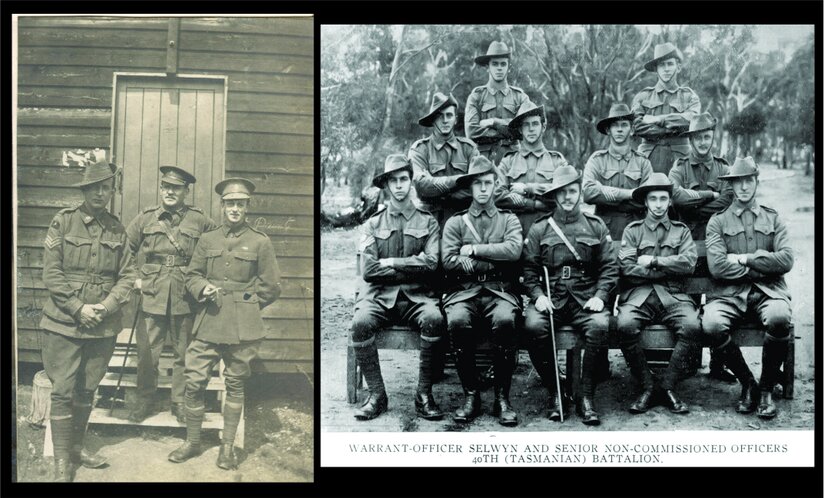
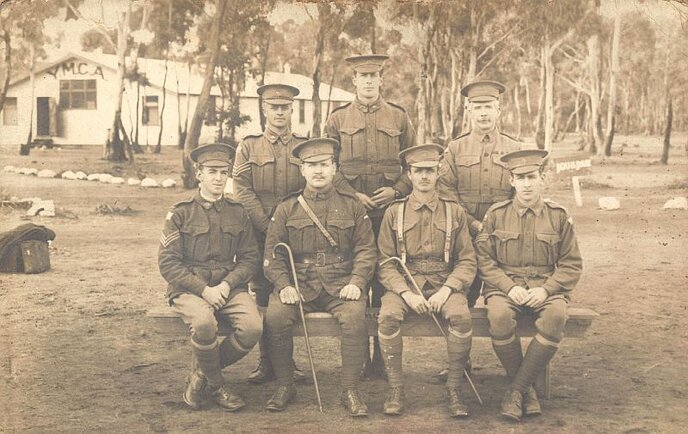
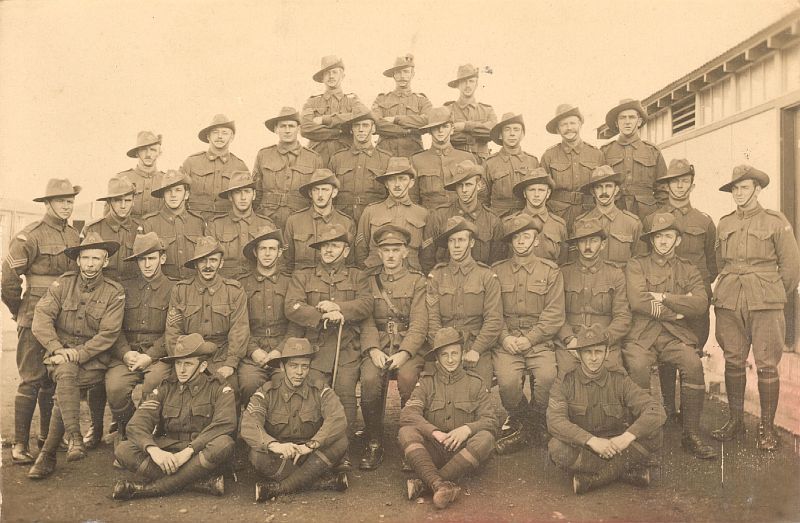
But married life must have worked wonders for Tom, for within weeks his next medical board recorded that his physical status had changed for the better, so he then enlisted in the 40th Battalion. The Fortieth Battalion was the only infantry battalion to be raised entirely within Tasmania. Shortly after joining the 40th Bn. he was promoted yet again in recognition of his experience and he became the first RSM of the battalion achieving the rank of Warrant Officer First Class.
He embarked with the Battalion for England on the 1st of July 1916 and after a period of training in England, arrived in France on the 23rd of November. Exactly two months after arriving in France, Tom was promoted again; this time he was commissioned in the field to the rank of 2nd Lt. (17th Jan 1917).
It appeared though that the terrible European Winter of 1916-17 affected Tom in terms of his health, for on the 11th of April he was admitted to hospital with a recurrence of the Myalgia and
Rheumatism he had endured at Gallipoli. He was shipped back to England on the 18th of April 1917, where he was admitted to the 3rd London General Hospital. Tom remained in hospital
until late May 1917 at which point he was then promoted to Lieutenant.
With his new rank Tom was given a new job, but because of the deterioration of his health and fitness he was posted as Quartermaster to No.1 Command Depot at Perham Downs. Perham Downs was part of the huge military establishment on Salisbury Plains, near Tidworth in Wiltshire.Prior to taking up his new posting Tom was given two weeks sick leave, but he was obviously still unwell as he reported to two Military Hospitals on the 14th and the 22nd of June, his ailment being recorded as NYD (Not Yet Diagnosed). On the 3rd of July he was placed on the Supernumerary list. His records then indicate he marched out to DMS (Director Medical Services AIF) London on the 14th of July.
On the 19th of July, however, Tom’s military career made a radical turn for the worse, when he went Absent Without Leave from Perham Downs around 1530hrs. On the 21st of July his Commanding Officer Lt. Col CH Knox, reported to AIF Headquarters that:
“I have to report that Lt T Selwyn 40th Bn, has been AWL from about 3.30pm on the 19th of July and has not yet reported.. . . “It is presumed this officer has gone to London…”
A description was attached, for the benefit of the Provost Corps in London.
Then on the 23rd of July Lt. Col Knox reported once again… “I beg to inform you that this officer has been placed under arrest by me, on Sunday evening the 22nd. I am going to charge him with absence of leave from 3.30pm 19th instant until 3pm 22nd instant. The summary of evidence is being taken this morning.”
Tom’s Court Martial records provide a list of witnesses for the prosecution. There were no witnesses for the defence and Tom, having chosen to represent himself, declined to cross-examine the prosecution witnesses and reserved his defence.
Having charged Tom and thinking he obviously had a cut and dried case, Lt. Col Knox then applied for a General Court Martial to be held. This was approved and recommended to be carried out as soon as possible. After some tidying up of the charges and prosecution witnesses’ statements the Court Martial was set for the 20th of August. During this time Tom was in “confinement” - this could mean he was locked up in the cells or as an officer he could have been simply confined to barracks and either report in person every few hours to the orderly room or be placed under guard.
During his trial Tom made a very interesting statement in mitigation of punishment, which read:
“On the morning of the 19th July I was suffering from an attack of rheumatism and I am now awaiting to pass a board. I had also a communication of bad news from home, stating that one of my children was very ill and I took a few glasses of whisky and that practically settled the whole business, as I do not remember any more until I was in London. As soon as I got better I came back from London. This is my first crime of 21 years of service. I sincerely regret it has happened. I really do not remember going away from Camp. I returned voluntarily to the Camp and reported to the Adjutant.”
This statement raises a couple of issues, the first being that Tom had no children that we know of. Secondly he hadn’t seen anywhere near 21 years’ service.
He was found guilty during his trial and his sentence was to take ‘rank and precedence’ in his corps and the AIF, as if his appointment as Lieutenant be dated the 15th August 1917. Obviously not much of a penalty, but one which could have seriously hurt a career officer. What probably hurt Tom more, was that he had spent 29 days in custody which meant he lost 33 days’ pay!
He was also relieved of his position as QM at No.1 Command Depot Perham Downs and then transferred to No.2 Command Depot Perham Downs, but his new CO Lt. Col Lane reported to AIF
HQ on the 19th of November that:
“I have to report that this officer’s state of health does not allow him to carry out his duties satisfactorily”… 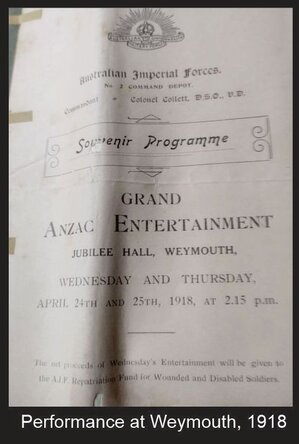
Lt. Col Lane even suggested a replacement for Tom and this was duly approved by GHQ AIF. They then placed Tom into another QM position at Littlemoor near Weymouth, but the QMG, Lt. Col McGlinn stated that he wasn’t happy with his performance and since he couldn’t employ him due to his state of health, he was recommending that he be returned to Australia. On the 10th of December AIF HQ gave approval for Tom to be returned to Australia for termination of his AIF appointment. It was also directed that this be carried out as soon as possible.
Rolling forward to March 16th 1918, HQ AIF London wrote to AIF Depot HQ in Tidworth inquiring as to why they had no record of Tom’s departure, and asking if in fact he hadn’t left, then the reasons for this. They replied, stating that Tom couldn’t be allowed to embark for Australia as he was required to give evidence at a Court of Enquiry. When pushed for a date when Tom could be released Lt. Col McGlinn who was Quarter Master General replied: “The delay in dispatching this officer to Australia is regretted, but he is seriously involved in connection with extensive deficiencies of Ordnance Stores at Littlemoor Camp. These deficiencies occurred during his term as QM, in addition to which, there is evidence to suggest that he was guilty of gross carelessness, if not neglect of duty, for the same period…” He went on to explain that the amount involved was substantial, and it was proving extremely difficult to elucidate the matter, but every effort would be extended to finalise it a.s.a.p!
In June, AIF HQ contacted AIF Depot HQ to say: “It is assumed that Lt T Selwyn is not yet available for return to Australia”. Further correspondence from AIF HQ made it clear that they were most unhappy about Tom not being released for embarkation and they demanded a date when this would happen. In correspondence dated 13th of July, HQ Depots stated that Tom Selwyn was now available for return to Australia since the Court of Enquiry had found him responsible for deficiencies in clothing and equipment to the amount of £79 2/9d which sum he has been ordered to make good. (They pursued the repayment of this money relentlessly until he was discharged). The sum £80.00 in the UK in 1918, would be worth around $10,600 in Australia in 2023.
After his inglorious fall from grace, Tom then spent the rest of his war at No.2 Command Depot at Weymouth before being shipped back to Australia on HMT Boonah on the 21st July 1918.
His service in the AIF was terminated in Melbourne on 20th of October 1918. [ Jim Rouse ]